
Extend Hydraulic Snubber Lifespan: The Chemistry You Can’t Ignore for Fronek Anchor/Darling Quality
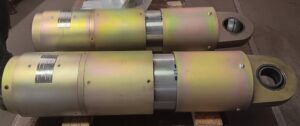
Fronek Anchor/Darling, a leading supplier of high-performance hydraulic and mechanical restraints, knows that the longevity and reliability of your piping systems rely on every component. A seemingly small detail, the compatibility between the snubber’s hydraulic fluid and its seals is one of the most critical factors determining snubber service life and performance.
The continuous operability of a hydraulic snubber—a device designed to permit slow, thermal movement while arresting rapid, potentially destructive motion from seismic events —relies heavily on its elastomeric seals. These seals maintain the integrity of the snubber’s hydraulic pressure boundary. If the fluid’s chemical composition is incompatible with the seal material, the consequences can be disastrous for the snubber’s performance and catastrophic for maintaining the integrity of the piping system.
In safety-related environments, such as ASME Nuclear Support (“NS) certified applications, equipment must operate with absolute reliability. Understanding the chemical interaction between the snubber’s fluid and its seals is vital to maximizing system uptime and reducing maintenance costs.
SF1154 Hydraulic Fluid: The Critical Chemistry Behind Nuclear Snubber Safety
For Fronek Anchor/Darling, the reliability of hydraulic piping restraints relies on more than just hardware; it hinges on the chemistry of the hydraulic medium. In safety-related applications, we exclusively use SF1154, a methylphenyl polysiloxane silicone fluid originally developed by General Electric and currently manufactured by Momentive Performance Materials (MPM) in Leverkusen, Germany.
Because the fluid’s performance is integral to the snubber’s performance, SF1154 is classified as a safety-related item. Understanding the unique properties of this fluid is essential for maintaining the operational integrity of nuclear piping systems.
Why SF1154 Viscosity and Composition Determine Snubber Performance
The hydraulic fluid within a snubber serves a dual purpose: it acts as a pressurized medium to transmit loads during seismic events (in the active state), and it relies on its viscous properties to allow thermal movement (in the passive state). SF1154 is specifically selected for these functions due to its stability and radiation resistance.
The Role of Viscosity: The operational performance of a hydraulic snubber is fundamentally linked to fluid viscosity. The fluid must work in concert with the physical dimensions of the snubber’s internal flow controls to assure appropriate activation during a system seismic event.
Critical Characteristic: Fronek Anchor/Darling’s team understands that fluid kinematic viscosity is a vital design characteristic. The viscosity’s nominal value, its tolerance range, and temperature characteristics are tightly controlled to ensure that snubber activation only occurs when necessary.
Newtonian Behavior: SF1154 is a classic Newtonian fluid, meaning its physical properties, such as density, viscosity, and bulk modulus, vary predictably with temperature.
Chemical Composition and Stability: SF1154 is a copolymer manufactured through a proprietary process that controls the length of polymeric chains and the ratio of methyl to phenyl groups. Fronek Anchor/Darling verifies the specific chemical composition of each batch of fluid received from the manufacturer using Fourier Transform Infrared Spectroscopy (FTIR) to ensure traceability to the fluid initially qualified for nuclear use.
The Interaction Between SF1154 and Ethylene Propylene Seals
The service life of hydraulic snubbers is highly dependent on the compatibility between the fluid and its elastomeric seals. If the fluid chemistry is incompatible with the seal material, it can lead to swelling, shrinking, or chemical degradation, ultimately causing snubber failure.
To prevent these failure modes, Fronek Anchor/Darling utilizes seals made from ethylene-propylene material, which is ideally suited to nuclear-grade silicone fluids such as SF1154.
- Preventing Degradation: Incompatible fluids can leach plasticizers from seals (which results in material shrinkage and increased hardness issues) or be absorbed by the seal (causing material swelling). By strictly adhering to the SF1154 specification, Fronek Anchor/Darling maintains the seal’s elasticity, which helps prevent fluid leakage.
- Radiation Resistance: SF1154 was selected during initial qualification because its physical characteristics remain stable up to 1 x 10^8 Rads of irradiation, a critical factor for components installed in nuclear containment areas.
Commercial Grade Dedication and Shelf Life Extension
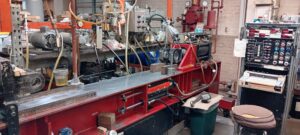
Because SF1154 is a commercial-grade product, Fronek Anchor/Darling implements a rigorous 10CFR50-Appendix B dedication practices to ensure the fluid performs its safety-related function.
Dedication Process: Procurement of SF1154 is accomplished directly from the manufacturer or authorized distributors, and the fluid’s critical characteristics are verified at receipt through the dedication process. This includes:
- Chemical Verification: Using FTIS to confirm the chemical composition of a controlled sample traceable to the original environmentally qualified fluid.
- Physical Testing: Verifying Refractive Index and Kinematic Viscosity at 25°C.
- Visual Inspection: Verifying that the fluid is clear with no haze or particulate contamination.
Extended Shelf Life. The fluid manufacturer recommends a “use before” date predicated on four years from the date of its manufacture. Historical data and recent testing indicate that the shelf life of SF1154 is essentially indefinite. Fronek Anchor/Darling has confirmed that the chemical composition remains stable for at least two decades. As part of Fronek Anchor/Darling’s dedication program, the shelf life of the fluid may be extended up to ten years from the date of manufacture through the distinct cycles of viscosity and chemical composition re-verification.
By strictly controlling the procurement, testing, and dedication of SF1154, Fronek Anchor/Darling ensures that every hydraulic snubber delivered to the nuclear industry will reliably perform its safety-related function.
The Three Ways Incompatible Fluid Attacks Seals
Incompatible fluid chemistry directly impacts the seal’s fundamental properties through physical and chemical reactions, accelerating seal material degradation:
- 1. Swelling (Increase in Volume): The seal material absorbs elements from the fluid, leading to excessive swelling. This can cause the seal to soften, lose physical strength, and extrude from the seal cavity under pressure, resulting in rapid wear and failure.
- 2. Shrinking (Decrease in Volume): Conversely, essential components (like plasticizers) in the seal material can be leached out by the fluid. This causes the seal to shrink, harden, and lose flexibility, resulting in reduced sealing force and reduced adhesion to its mating surface, leading to breakage.
- 3. Chemical Degradation: The use of fluid additives or breakdown products (often accelerated by high operating temperatures) can chemically attack the polymer chains of the seal. This can cause the material to harden or become brittle, resulting in a loss of elasticity needed to maintain a dynamic seal.
The consequences of these reactions include increased friction, loss of sealing ability, and ultimately, hydraulic snubber failure.
Proactive Measures to Lengthen Snubber Service Life
To ensure your hydraulic snubbers perform their critical safety function for their entire service life, adherence to the following maintenance principles is strongly recommended:
- Strict Compatibility Matching: Always confirm that the hydraulic fluid’s base oil and additives are compatible with the specific seal material used in Fronek Anchor/Darling snubbers, using SF1154 fluid. Never substitute fluids or introduce potentially harmful additives.
- Temperature Control: Excessive heat accelerates fluid and seal degradation. Fronek Anchor/Darling recommends maintaining fluid operating temperatures (under non-accident conditions) to less than 150°F.
Choose Fronek Anchor/Darling for Hydraulic Fluid and Seal Compatibility….Every Time
Don’t let fluid incompatibility compromise the safety and performance of your critical piping restraints. Contact our hydraulic fluid experts for a comprehensive review of your hydraulic fluid and seal material compatibility to extend the service life of your hydraulic snubbers and guarantee their performance under extreme conditions.