
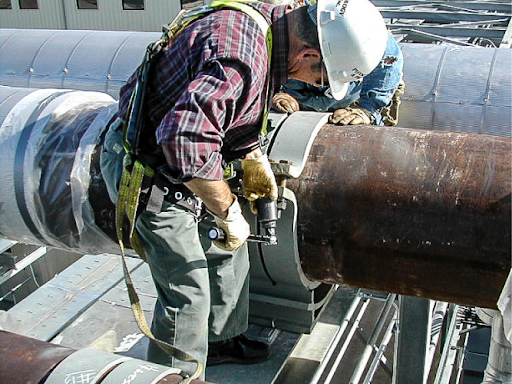
A significant portion of Fronek Anchor/Darling’s engineering work takes place before a purchase order exists. Application reviews, drawing markups, technical consultations, retrofit evaluations, none of it appears on an invoice, but each step directly determines whether a snubber fits the job it is being asked to do.
This article covers five ways Fronek’s engineering team gets involved in a design, from first inquiry through fabrication.
1. Application Reviews
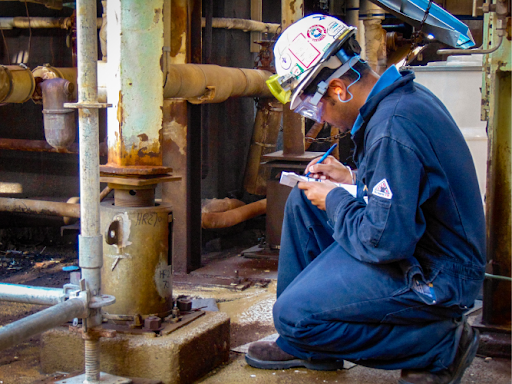
Every RFQ that reaches Fronek’s engineering desk is reviewed against the actual application before a quotation is prepared. That means evaluating the design load, the expected thermal movement, and the available installation space, not just matching a part number off a data sheet or a competitor’s catalog.
A figure that looks close on paper, does not always hold up once the numbers are run. When a request comes in to match or substitute a competitor’s unit with little more than a part number to work from, Fronek’s team asks for the design load and the net thermal displacement at the installation point before recommending anything. A mismatch caught at this stage costs nothing to correct. A mismatch found after a unit ships carries consequences covered in detail in The Real Cost of Improper Snubber Selection.
2. Drawing Markups
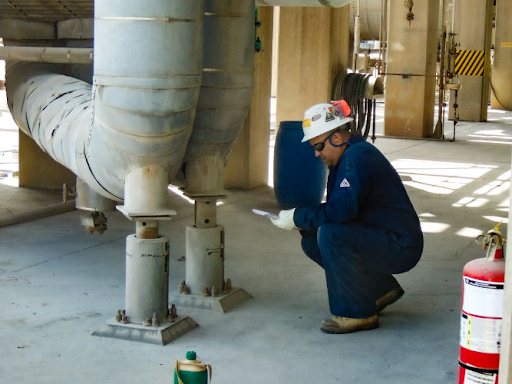
Once a design is confirmed, the drawings go through a detailed review before fabrication begins. Fronek’s engineering team checks pin-to-pin dimensions against the actual attachment/bracket take-outs, confirms hot and cold installation positions on the drawing, and cross-checking the assembly list against the relevant drawings.
When the assembly list and the drawing do not agree, the discrepancy is marked up and returned for clarification before any fabrication work starts. That step adds time on paper. It eliminates re-orders, field fit-up problems, and rework after shipment.
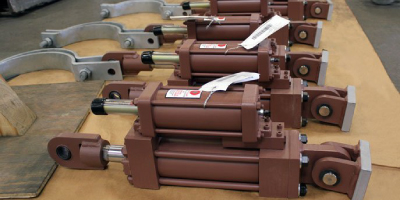
3. Technical Consultation
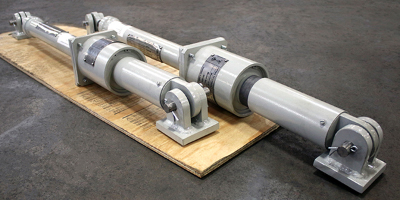
Not every question requires a formal quotation. Engineers, maintenance planners, and procurement contacts frequently need a direct answer before a project reaches the RFQ stage, whether a hydraulic snubber is a viable substitute for an aging mechanical unit, what the practical difference is between preset and lock-up velocity, or whether an existing clamp and end bracket can be reused on a replacement assembly.
Fronek’s engineering team handles these questions regularly, often in a direct conversation rather than a formal written exchange. Resolving an application question before an order is placed is substantially easier than identifying an error six weeks later when the part arrives on
site. For a detailed reference on snubber dimensional terminology, refer to The Snubber Terminology Guide.
4. Retrofit Assistance
Plants operating piping systems, especially the ones that are twenty or thirty years old, rarely have drawings that still reflect what is actually installed. When a snubber reaches the point where spare parts are no longer available, or corrosion has taken a unit past the point of economical repair, Fronek evaluates what can be rebuilt, what needs to be replaced, and where the original design is no longer practical to reproduce.
Retrofit work typically involves sizing a replacement from the actual cold pin-to-pin dimension, the expected thermal movement, and the confirmed load, and in many cases, designing a new structural attachment where the original mounting hardware does not carry over cleanly. This process is covered in detail in the case study When Snubber Records Go Missing, which illustrates what happens when original selection documentation is no longer available.
5. Custom Configurations
Standard catalog numbers do not fit every application. Fronek sizes each unit to the actual design load and thermal displacement at the specific installation point, and where additional stroke provides operational margin or future flexibility, that option is presented rather than assumed.
Custom configurations also include non-standard structural attachments, pin sizes matched to existing hardware, and finish-specifications outside the standard catalog. The engineering basis for the snubber itself does not change; the configuration around it is built to fit the job. For applications involving silicone-based hydraulic fluid requirements specific to the operating temperature range, fluid selection is reviewed as part of the configuration process.
Summary
Each of the five activities above is standard engineering practice, the work required to confirm that a snubber fits its installation, performs as designed under both thermal and dynamic conditions, and does not create an unanalyzed restraint condition in the field. For a broader look at what incorrect snubber selection costs when these steps are skipped, refer to The Real Cost of Improper Snubber Selection.
To discuss a specific snubber application, review an existing installation, or request an engineering evaluation, contact the Fronek Anchor/Darling team or request a quote.