
What Forty Years in Service Does to a Snubber Population
Most piping snubbers operating in nuclear plants today were installed during original construction in the 1970s and 1980s. As plants move into subsequent license renewal and plan for sixty or eighty years of operation, that original hardware is reaching the point where conventional maintenance is no longer straightforward. The following covers five reasons plants are increasingly retiring legacy hydraulic and mechanical piping snubber (also known as dynamic pipe restraints) populations rather than continuing to rebuild them.
1. Obsolescence
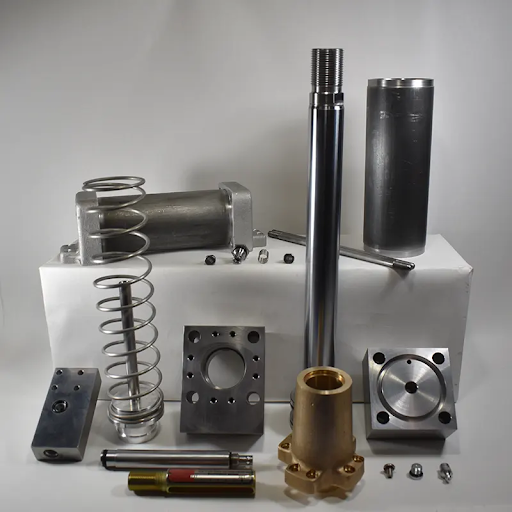
Part numbers, drawings, and assembly specifications from the 1970s and 1980s have gone through decades of engineering revisions and, in a significant number of cases, they’ve been discontinued. A part number recorded in a plant’s database does not always correspond to anything a manufacturer can currently produce.
Fronek’s engineering team has received RFQs for part numbers that have become obsolete, requiring detailed technical investigation to confirm an equivalent before a quotation can be issued. For plants working through legacy part identification, Fronek’s replacement parts and replacement cylinders pages provide current configuration equivalents for Bergen-Paterson and other legacy designs. A single-digit discrepancy between a plant’s records and the manufacturer’s current catalog is enough to stall an order until the conflict is resolved.
2. Corrosion
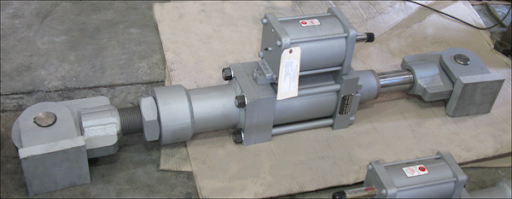
A large portion of original snubber installations are located outdoors or in high-heat, high-humidity environments, with limited access for condition assessment between outages. Forty or more years of that exposure on pins, housings, and mounting hardware has an impact on various snubber parts, in ways that are not visible without disassembly.
In severe cases, corrosion has advanced to the point where a unit cannot be safely disassembled for rebuilding without risking component-level damage. What was initially scoped as a routine rebuild becomes a full replacement decision once the unit is opened.
3. Maintenance Burden
The serviceability of a legacy snubber often cannot be determined from external inspection. A full teardown is required to assess which internal components remain within acceptable tolerances and which do not. When degraded parts are not in inventory, they must be manufactured from scratch. A job scoped as a two-week rebuild can extend to two months when custom fabrication of internal components is required. Carried across a large population of aging units, that uncertainty creates significant planning risk for a maintenance program. Refer to Fronek’s Standards and Specifications for the quality and certification framework that governs replacement component manufacturing.
4. Legacy Mechanical Units
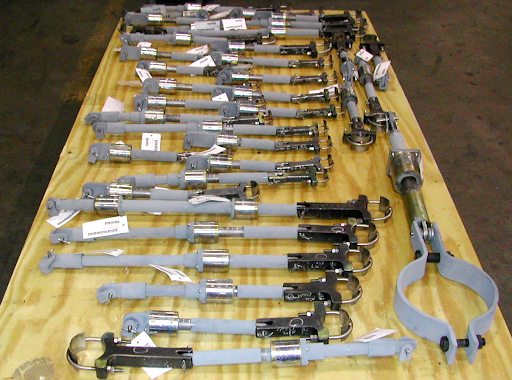
Mechanical snubbers were the standard design through the 1970s and 1980s. Prominent manufacturers from this period included Pacific Scientific, Anchor/Darling, and Basic-PSA, among others. Many of those original designs have been out of production for decades, although their products remain installed at several utilities.
Units of the same model number may have been rebuilt or modified differently over the years, meaning parts that appear interchangeable based on nameplate data may not function identically in service.
When a new manufacturer is not available on the required timeline, rebuilt low-radiation replacement units sourced from other utilities through industry exchange programs are one option. It is not uncommon for a specific mechanical design to have gone unbuilt since the mid-1980s. For plants considering a conversion, the engineering considerations involved are covered in The Real Cost of Improper Snubber Selection.
5. Outage-Driven Replacement Decisions
Snubbers can only be pulled, inspected, or replaced during a scheduled outage. That maintenance window, typically every eighteen to twenty-four months, is the only practical opportunity to act on a legacy unit. Functional testing requirements under 10CFR 50 (which sets the rules for building and running nuclear reactors and other large nuclear facilities in the United States) add further scheduling constraints to an already compressed window.
An uncertain rebuild timeline is difficult to reconcile with a fixed return-to-service date. When the rebuild scope cannot be defined until the unit is disassembled, the schedule risk often tips the decision toward a new unit rather than restoring a legacy one, particularly for mechanical designs where parts availability is already constrained.
Summary
The pressures described above are not unusual for plants operating hardware well beyond their original design life. Obsolete part numbers, corroded internals, uncertain rebuild timelines, and a fixed maintenance calendar combine to make the rebuild-versus-replace decision more complex than it once was.
For plants evaluating a legacy snubber population ahead of an outage, whether the question is rebuild feasibility, parts availability, or equivalent specification for an obsolete unit, schedule a meeting with Fronek’s engineering team, contact us, or request a quote before the outage window closes.