

What Happens During an Outage?
Most industrial plants are designed to run continuously for long periods of time, sometimes years, with minimal interruption. But eventually, every facility reaches the point where systems need to be inspected, repaired, tested, or upgraded.
An outage is essentially a planned shutdown of a plant or process system so maintenance and inspections can be performed safely. In industries like nuclear, fossil power, petrochemical, and heavy process manufacturing, outages are major events involving hundreds – sometimes thousands – of personnel working around the clock.
Imagine trying to renovate an entire city while also racing against a stopwatch that costs millions of dollars per day. That’s outage season.
During these shutdowns:
- Insulation gets removed
- Valves are rebuilt
- Piping systems are inspected
- Welds are examined
- Supports are tested
- Components that are normally inaccessible suddenly become reachable
This is also the time when many piping support components – including snubbers – finally get their moment in the spotlight.
For most of the year, snubbers quietly sit in the background doing their job without attracting much attention. But during an outage, they quickly become one of the many critical components, utilities need to evaluate before the plant can safely return to service.
And much like your car making strange noises the week before a road trip, this is usually when hidden problems decide to reveal themselves.
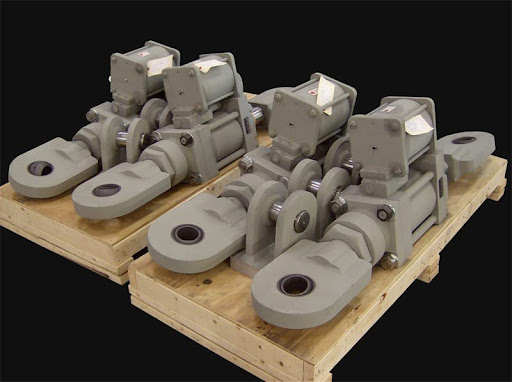
Why Snubbers Matter During Outages
Snubbers are designed to live difficult lives.
They operate in environments involving:
- Heat
- Vibration
- Moisture
- Corrosion
- Radiation (in nuclear facilities)
- Years of continuous service
Over time, seals can age, hydraulic fluid can degrade, corrosion can develop, and mechanical components can wear. Most of these issues are not obvious during normal operation – which is exactly why outage inspections are so important.
During outages, utilities often perform:
- Visual inspections,
- Functional testing,
- Maintenance evaluations,
- In some cases full rebuilds or replacements
A snubber that fails inspection can create significant operational concerns. If a snubber cannot properly restrain dynamic movement during a transient event, the piping system may no longer behave as originally designed during seismic activity, water hammer, or other abnormal conditions.
In simpler terms: the component nobody noticed for five years suddenly becomes extremely important at 2:00 AM during outage week three.
This is especially true in nuclear facilities, where snubber programs are heavily managed and documented under strict inspection and testing requirements.
For outage teams, snubbers are not just “pipe accessories.” They are safety-related dynamic restraints that directly impact system operability and startup readiness.
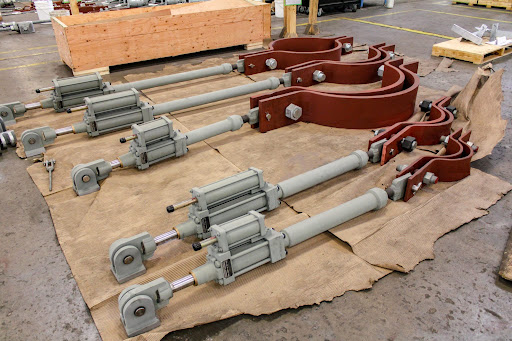
How Outages Drive the Snubber Industry
Outages are one of the primary drivers of activity within the snubber industry.
Why?
Because outages compress years of maintenance-needs into very short windows of time.
A plant may operate continuously for 18–24 months, but during a refueling or maintenance outage, utilities suddenly need:
- Inspections completed
- Engineering evaluations issued
- Failed snubbers rebuilt
- Replacement units manufactured
- Testing performed
- Documentation finalized – all on extremely aggressive schedules.
During peak outage seasons, snubber vendors, rebuild shops, field service teams, QA departments, and engineering groups often shift into full sprint mode. Expedited orders become common, machine shops extend working hours, and everyone starts using phrases like:
“How quickly can you turn this around?”
In many cases, outage schedules are so tight that even relatively small delays can ripple into major startup impacts.
That urgency is what makes the outage environment unique.
Outside of outage season, snubber work can feel methodical and planned. During outages, however, the industry becomes highly schedule-driven and reactive. Components that have been quietly installed for decades suddenly require immediate engineering attention.
It is not uncommon for a snubber discovered in poor condition on Monday to require engineering review, rebuild, testing, documentation, and shipment before the weekend.
The Critical Path Problem
One of the biggest challenges during outages is something known as the “critical path.”
The critical path refers to activities that directly affect when a plant can restart operation. If one critical task gets delayed, the entire outage schedule can begin to slide.
And this is where snubbers can unexpectedly become very important.
For example:
- A failed snubber may require engineering evaluation,
- Replacement hardware may need to be fabricated,
- Support clearances may need verification,
- Functional testing may need to be repeated before startup approval is granted.
Even though snubbers are relatively small compared to massive turbines, boilers, or reactors, they can still impact overall outage schedules if issues are discovered late in the process.
This is one reason utilities place significant emphasis on outage planning, preventative maintenance, and long-term asset management programs. Identifying problems early helps avoid costly surprises during the outage itself.
Because in the outage world, discovering a failed component on Day 2 is manageable.
Discovering it on the final weekend before startup? That’s when entire conference rooms suddenly become very interested in pipe supports.
At the end of the day, outages are about reliability, safety, and returning systems to operation as efficiently as possible. Snubbers may not always be the most visible components in a plant, but during outage season, they often become some of the most important.