
The three cases below are drawn from active nuclear plant engagements, and each reflects a different aspect of the obsolescence, parts scarcity, and maintenance burden driving plants to reassess their installed snubber populations.
For a broader overview of why aging nuclear fleets are moving away from legacy hardware, refer to this blog: Why Old Nuclear Plants Are Replacing Aging Piping Snubbers.
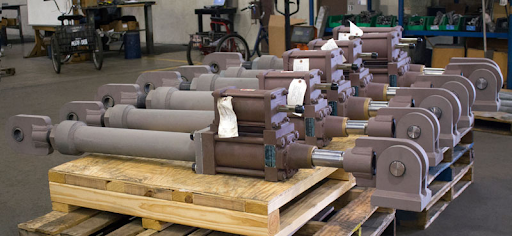
Case 1 – Obsolete Part Number: When a Database Record No Longer Corresponds to a Buildable Part
Background
A nuclear plant issued a request for a rear bracket assembly against a specific part number. On review, that part number had no active record in the manufacturer’s system.
The Challenge
An obsolete part number on an RFQ does not always mean the part itself is gone; it may mean the number was superseded, revised, or incorrectly transcribed from an aging drawing. Quoting against a non-existent part number produces a purchase order that cannot be fulfilled. The correct response is to identify what the plant actually needs before a quote goes out.
How It Was Resolved
Fronek’s engineering team flagged the obsolete number and proposed the likely current equivalent pending confirmation from the plant. The site engineer cross-referenced the part number against the plant’s own asset records, confirmed a single-digit transcription error in the original request, and provided the original installation drawing to close the loop. The quotation was issued against the correct part number, and the plant requested that the drawing reference be added to the part description going forward, a documentation fix that prevents the same search from recurring on the next order.
 Key Insight: Validate the part number and drawing before quoting legacy hardware.
Engineering Consideration
A part number carried forward from a 1970s or 1980s drawing into a plant’s computerized maintenance management system may have undergone multiple revision cycles since its original installation. Confirming current equivalency before quoting is a standard step in Fronek’s application review process. For plants working through legacy part identification, Fronek’s replacement parts and replacement cylinders pages provide current configuration equivalents for Bergen-Paterson and other legacy designs.
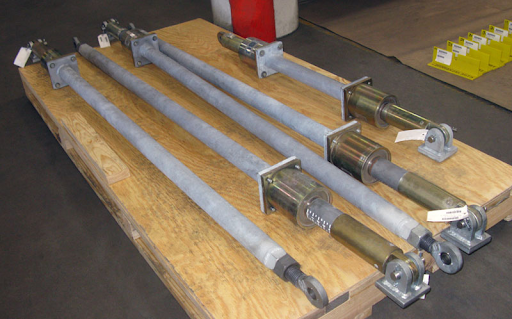
Case 2 – Parts Scarcity: Inter-Utility Exchange for an AD-500 Series Mechanical Snubber
Background
A nuclear plant had an urgent operational need for AD-500 series mechanical snubbers. The new manufacturing lead time for that design was approximately three months, beyond what the plant’s schedule could accommodate.
The Challenge
We typically manufacture nuclear-grade snubbers to order rather than maintain them in stock. When new manufacturing lead time exceeds a plant’s operational requirement, the only practical options are a qualified rebuild from another utility or a sourced unit from the industry’s established exchange program. Neither option is straightforward; traceability documentation, radiation status confirmation, and qualification records must all be in order before a unit can transfer between plants.
How It Was Resolved
Fronek identified a nuclear plant operating a qualified Anchor Darling rebuild shop, one of the few remaining outside the original manufacturer, that had two rebuilt and tested AD-501 units available. Both units were confirmed as low-radioactivity (low-RAD), meaning their radiation levels had been measured and cleared for handling and reuse under standard controls. Serial numbers were traced back to the original purchase order for documentation continuity, and Fronek supported the paperwork, including an industry-standard transfer letter, required to complete the inter-utility transfer under the nuclear industry’s established Exchange Program. The transfer provided a bridge unit while the new manufacture order proceeded on its standard timeline.
Engineering Consideration
The AD-500 series case is a direct illustration of how thin the remaining supply of original 1980s-era mechanical hardware has become across the nuclear fleet. For plants carrying mechanical snubbers of this generation, new manufacture is not always an option on a compressed timeline, and exchange program availability is not guaranteed. For plants considering conversion from mechanical to hydraulic units, the engineering considerations are covered in The Real Cost of Improper Snubber Selection.
Case 3 – Maintenance Reality: Supporting a Legacy Hydraulic Fleet Without Complete Assemblies
Background
A nuclear plant contacted Fronek needing either a complete safety-related BP-70 hydraulic snubber assembly or the parts and fluid required to rebuild an existing unit in place.
The Challenge
For hydraulic snubbers this old, complete safety-related units usually aren’t sitting on the shelf. The usual approach is to keep seals, fluid, and spare internal parts on hand to maintain the existing units between outages. Full rebuilds or replacements are typically planned for an outage.
How It Was Resolved
Fronek had 70 Kip seal kits, SF-1154 silicone-based hydraulic fluid, and the majority of the internal rebuild components on hand. The one gap was the main cylinder heads, which require separate fabrication. The plant was provided with the available components to proceed with an in-place rebuild while the cylinder heads were manufactured.
Engineering Consideration
This engagement reflects the day-to-day maintenance reality for plants still running original 1970s and 1980s hydraulic hardware. Complete assemblies are the exception. Keeping units operational between outages depends on parts depth, particularly seals, fluid, and wear components, rather than complete unit availability. Fronek’s replacement parts inventory is maintained specifically to support this kind of between-outage servicing for legacy hydraulic populations. For the quality and certification framework governing replacement components, refer to Fronek’s Standards and Specifications.
Summary
| Case | Core Issue | Resolution |
| Case 1 – Obsolete Part Number | Part number in plant database had no active manufacturer record | Current equivalent confirmed; drawing reference added to prevent recurrence |
| Case 2 – Parts Scarcity | New manufacturer lead time exceeded plant schedule for AD-500 series mechanical unit | Low-RAD rebuilt units sourced through inter-utility exchange program with full traceability documentation |
| Case 3 – Legacy Hydraulic Maintenance | Complete safety-related assembly unavailable for BP-70 design | Seal kits, fluid, and internal components supplied for in-place rebuild; cylinder heads manufactured separately |
Each of these three cases required a different response, a records check, a connection to another utility’s rebuild inventory, and a parts search against a design that has not been manufactured as a complete assembly in decades. Taken together, they reflect the condition of the nuclear fleet’s oldest snubber populations: obsolete records, a diminishing pool of original mechanical hardware, and a maintenance load that does not ease between outages.
For plants working through a part number search, evaluating a rebuild against a replacement, or assessing what remains available for a legacy snubber population, schedule a meeting with Fronek’s engineering team, contact us, or request a quote before the next outage window closes.